




07.11.2025
Das Orchester -lehti: toiminnanjohtaja Iiris Lehtosen haastattelu
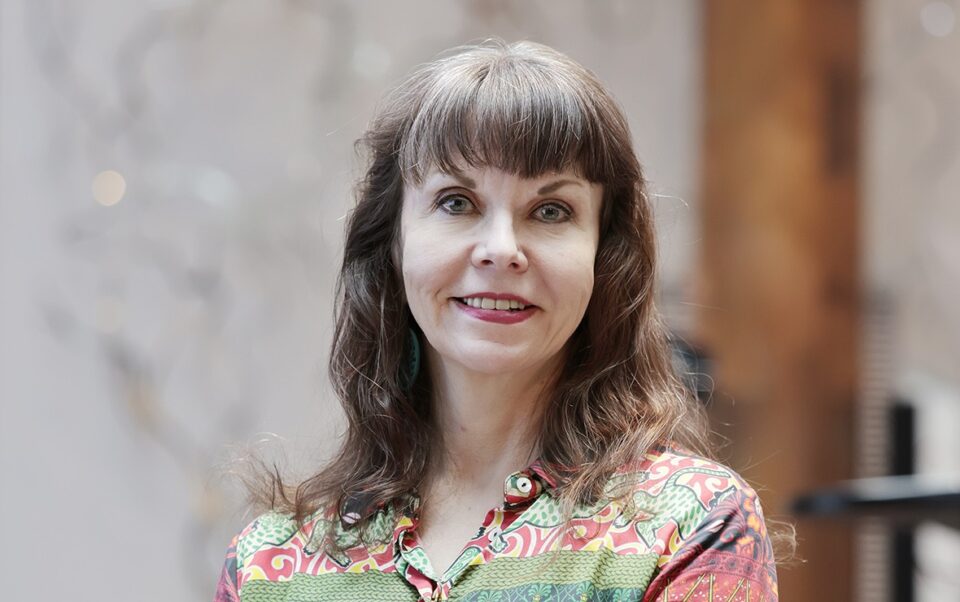
Das Orchester -lehti julkaisi heinäkuun 2025 numerossaan artikkelin, jossa Suomen Sinfoniaorkesterit ry:n toiminnanjohtaja Iiris Lehtonen kertoo suomalaisen orkesterikentän historiasta ja nykytilanteesta. Alkuperäinen artikkeli on julkaistu saksaksi, mutta sen voi lukea alta myös tekoälykäännöksenä.
Iiris Lehtonen works as the Executive Director of the Association of Finnish Symphony Orchestras. This year, the association celebrates its 60th anniversary and has 34 member orchestras.
Let’s start with a spotlight on Finland’s orchestra scene. Looking back in history, since when (approximately) does the country have professional orchestras – how and when did this tradition start?
The origins of Finnish orchestras are closely linked to the development of public cultural life in the early 20th century. As a young nation that believed in education and enlightenment, Finland sought through music international recognition and a cultural anchor for its existence. Through music, Finns became part of a European cultural heritage that transcended language barriers, while at the same time defining our own distinct identity.
Most early orchestras were amateur ensembles. It was precisely through this that orchestras gained their communal and local influence, as well as their regional characteristics.
When the Association of Finnish Symphony Orchestras was founded in 1965, professional orchestral activity in Finland was still in its early stages. There were amateur-run orchestras and ensembles across the country, and orchestral playing had been practiced in Finland since the 16th century, but as recently as the early 1960s, there were only four professional orchestras.
How many orchestras do currently exist in Finland, and where are they located? How many symphony orchestras are among them – and are there also opera orchestras, chamber orchestras, and specialized ensembles (e. g. for baroque music)?
Our member orchestras are located across the country. Finland’s extensive orchestral network has often been considered unique in relation to the size of the country. However, the most distinctive feature of Finnish orchestras is not their number, but their diversity. Finnish orchestras have always played a significant role in local history and identity.
There are 15 symphony orchestras, including opera and radio orchestras. In addition, our association includes chamber orchestras, two entertainment orchestras, as well as jazz, youth, educational, and military orchestras. The membership also comprises orchestras specialized in specific musical genres, such as baroque orchestras and an orchestra focused on contemporary music.
How many professional musicians work in these orchestras, all in all?
Our member orchestras have a total of 1,029 permanent musician positions. In addition, the orchestras employ over 3,000 temporary musicians and freelancers each year.
How are the orchestras financed: Are they all publicly funded, or are there also sponsorship models? Do municipalities and towns pay for ”their” orchestras on their own, or does the state help with the costs?
All our member orchestras receive public funding. In addition to the state, the main financiers are the municipalities where the orchestras are located. The state funding is based on legislation (the Act on Performing Arts). Public support covers, on average, 75 percent of the orchestras’ expenses.
There are also sponsorship partnerships, but especially attracting new sponsors remains a challenge.
Where in Finland do young musicians study, how many conservatories are there? And how are their chances to find jobs in Finland?
There are 15 conservatories in Finland, and it is estimated that approximately one in four of Finland’s over 300 municipalities have a music institute. The Sibelius Academy of the University of the Arts Helsinki is one of the largest music academies in Europe and provides the highest level of music education in Finland. Internationally renowned, the Sibelius Academy has been educating world-class artists and versatile music professionals since 1882.
One fifth of the musicians in Finnish orchestras already have an international background. I believe that the high quality of Finnish music education will continue to secure employment opportunities for young Finnish musicians in the future. We have discussed with the Sibelius Academy the need to further strengthen the development of non-instrumental professional skills (“work-readiness”) of future orchestra musicians already during their studies.
In Germany, some clichés about Scandinavian music die very hard. Thinking of Finnish classical music, most Germans will think of Sibelius and very little else. Which Finnish composers are they missing out on?
Our association has been conducting extensive and diverse statistical work in the professional orchestra sector for 50 years. We also collect data on the composers performed annually by orchestras. In 2024, a total of 1,593 works by 380 Finnish composers were performed. One of them was Sibelius.
The significance of Jean Sibelius as a driving force behind the early enthusiasm for orchestras cannot be overstated. Many Finnish orchestras have, even later, aspired to form ensembles capable of performing Sibelius’s symphonies.
Finnish orchestras perform a great deal of contemporary music. Last year, contemporary music accounted for as much as 21 percent of symphony concerts. Of this contemporary repertoire, 13 percent was music by Finnish composers and 28 percent was music composed by women. All key figures related to contemporary music showed growth compared to the previous year.
In numerous German towns, orchestras and conservatories feel threatened by cuts in their budgets. Now Finnish orchestras seem to face a similar problem. Are all the orchestras in Finland affected equally, or is the problem (so far) just a matter of certain towns that are strapped for cash? Where do you see the reasons for the cuts?
This year, our member orchestras faced a cut of €1.2 million in state subsidies. The primary reason for the cuts was the weakness of the national economy and the unexpectedly high costs of the welfare districts, which were established at the beginning of 2023. These districts were created when social and healthcare services were separated from municipalities’ basic services into independent administrative entities.
The cuts have not been applied evenly across orchestras but have mainly affected large and medium-sized municipal orchestras, with an average reduction of about 6 percent in their state funding.
No cuts were made to orchestras that focus on children and young people or that engage in touring activities.
Last month, the government decided that there will be no further cuts to culture — including orchestras — in 2026.
As a result of the government’s earlier budget reductions, the role of municipalities as supporters of orchestras will become even more significant.
What do you think: What will Finlands orchestra scene look like in ten or 20 years? Will all the orchestras ”survive”, or may some of them have to close down, given the financial hardships?
I personally believe that the Finnish orchestral network will continue to operate strongly and that all Finns will continue to have access to high-quality orchestral music.
Public support and the predictability of that support are crucial for maintaining the vitality of the entire orchestral sector. Activities that sustain the foundations of culture, renew society, and promote well-being must continue to be safeguarded with public funding in the future. This view is also reflected in the government’s recent cultural policy report submitted to Parliament.
We have also wanted to raise the question of whether Finnish orchestras will remain attractive employers in the future, and how orchestras should develop their operations to best meet young people’s expectations as appealing workplaces.
What can Finnish orchestras do to keep their audiences, and to gain new concertgoers? Do they already do enough?
History and tradition are the cornerstones of orchestras’ core expertise — foundations upon which almost anything surprising can be built. This is something Finland excels at.
Orchestras must be a part of the community around them. It is essential to maintain active contact with schools to inspire young people to embark on the long-term path that leads either to a profession or a meaningful hobby. Skilled individuals are needed to support community building and maintain connections with local municipalities. It is also wonderful when the conductor is perceived as “one of our own” in the orchestra’s home region.
Orchestras reach out to their communities in many ways. They organize concerts with special programs, park concerts, and performances by smaller ensembles. An orchestra can also show that it shares the same concerns and interests as its community — for example, by performing concerts with climate-related themes. Communication and marketing must be clear and informative.
What can German orchestras and musicians learn from their Finnish colleagues?
I am not very familiar with the German approach, but I would like to mention a couple of things.
Despite their diversity and variety, Finnish orchestras form a strong, nationwide and equal collegial community, in which expertise and experience are shared openly and actively through various internal professional networks maintained by our association.
Orchestras are flexible and innovative; they can identify future drivers of change in their operational and social environments, and of seeking practical responses — based on their own unique starting points — to issues that affect all Finns, such as loneliness, segregation, or well-being.
Orchestras have long been engaged in dedicated efforts to improve occupational well-being.
(Translated by ChatGPT.)